
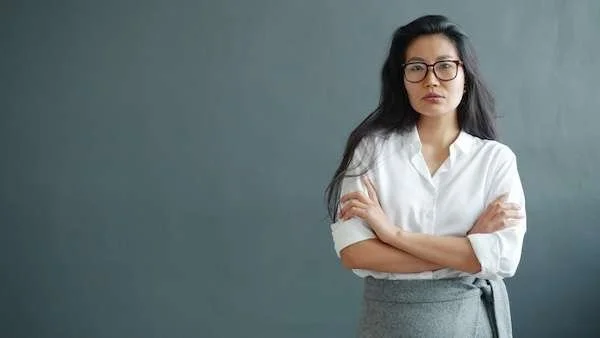
Somatics is much deeper and much more nuanced than simply being about whether or not you are standing in a “power pose,” for example. That said, there is a part of somatic development that is very much connected to our body language and posture. Let’s break this down a bit more to better understand these distinctions.
How we live in our bodies affects how we feel
It’s absolutely the case that how we sit, stand, and walk is going to have an impact on our moods, emotions, thinking and psychology. As an example, let yourself move into a posture of collapse and take on a “body of resignation.” Your spine is collapsed, shoulders slumped, and head hanging; your face is sullen and eyes are downcast. Most people, if they spend enough time in this posture, will actually begin to feel resigned! At a minimum, living in this body shape will make us more prone to feeling resignation. This is the same reason people are sometimes told to take on the “power pose” when interviewing for a job, or to smile more in order to feel happier.
How we live in our bodies affects how others see us
And it’s not only the case that the shape we take in our body will affect how we feel, because of course how we look is going to impact how others read us. We all know instinctively and without thinking about it when someone looks warm and inviting versus when someone looks unapproachable. Similarly, we are all aware of “manspreading” and the ways men in our culture often take on a posture in which others are left feeling pushed out.
Somatics is not simply about biomechanics
How we organize in the tissues of our body - the length we bring the spine, the width we take up when we stand, how we breathe, the tension around our eyes, etc. - will absolutely influence how we feel and how we are perceived by others. Somatics, however, goes way deeper than this. Remember that the body and the self are indistinguishable; how we are living in our bodies is helping to create the moods and the self-narratives that we embody. When we are looking at somatic development, we are interested in how we organize in the body precisely because it has so much influence over the attitudes and stories that run us. Somatic coaching is working not just with body language and posture, but with the self - with the whole person.
It’s less about what we are doing and more about how we are doing it
Here is a practice: cross your arms and take on a defensive posture. Assume an attitude of “I’m not going to let you get to me.” Feel yourself forming a wall between yourself and someone you are imagining talking to. As you do this, notice the sensation around your eyes and your jaw, feel the tissue in shoulders and belly and notice any tension or holding there. Notice how you are breathing. What other emotions or thoughts arise while you hold this shape?
Now, without uncrossing your arms, relax the muscles in your arms such that you are much less rigid across your chest and shoulders. Let your jaw and mouth relax and invite the corners of your eyes slightly upward. With your arms loosely crossed, imagine someone in front of you and assume an attitude of “I’m here to be present and connected.” Be as relaxed as possible, let your breath move into the belly, and imagine being intentional in showing this imagined person that you are warm, upbeat, and inviting. What emotions or thoughts do you notice now?
For most of us, these shifts in how we are holding tension, how we are breathing, and how we are essentially allowing energy to move in our body (combined with our intention and mood that we are practicing) is going to have huge impacts in how others connect with us and how we connect with ourselves. Even though we may have a similar posture in both instances, how we practice those shapes makes a world of difference.
Interested in exploring how to live more fully in your body so that you can create more choice around your emotions, thoughts, and the ways that you connect with others? Send me a message to discuss if somatic coaching is the right match for you!